This was not primarily a form-building problem. It was a process-control problem.
The value came from understanding how physical stock, supplier decisions, financial verification, management approval and system execution interact — and then turning those dependencies into one practical workflow.
The design question was never which fields to put on a screen. It was who decides what, on what evidence, before which step, and how anyone can tell afterwards that the step actually happened.
Process → Responsibility → Evidence → Control
A workflow of this kind earns its place by being narrower than the people using it, not wider: it holds the shape of the process and the record of what was done, and leaves the judgement where it belongs.
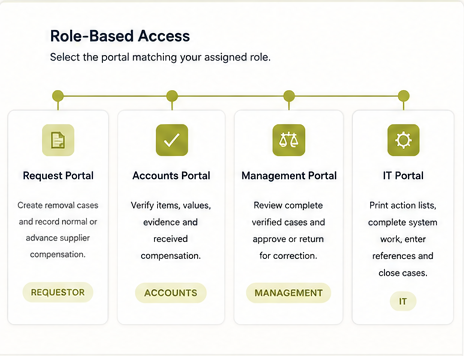
This case study describes a process, not an organisation. No organisation, customer, supplier, invoice reference, credit-note reference, case number, item code, batch number, quantity or compensation value appears here. The role-based entry view is a reconstruction of the implemented workflow using representative information, not a literal screen capture; the route, workflow, lifecycle and execution diagrams are editorial explanations of the process logic rather than depictions of an interface.